Never Squeezed
At least 80 columns, and 24 rows in portrait, so htop, vim and AI agents always get room to draw. Fit-width by default, pinch to zoom.
iOS has no terminal app of its own, so to SSH from an iPhone you need one. RETRO TMUX is an SSH client for iPhone that logs in with a key from your Keychain, attaches to real tmux sessions on your server and gives you Esc, Tab, Ctrl and arrows. Lock the phone and your work keeps running.
$ sudo apt install tmux && tmux new -s work
# then, on your iPhone:
RETRO TMUX → + ADD HOST → TEST SSH → work → you're in.
# lock the phone whenever. the session lives on the server, not in your pocket.
// Why tmux //
An iPhone is the worst place for a plain SSH session. iOS suspends apps seconds after they leave the screen, and the connection goes with them. The server hangs up on your shell, and the build, the migration or the agent you left running dies with it. With tmux, your work lives on the server: the phone can lock, ring or drop to one bar, and you carry on exactly where you left off.
// The keyboard //
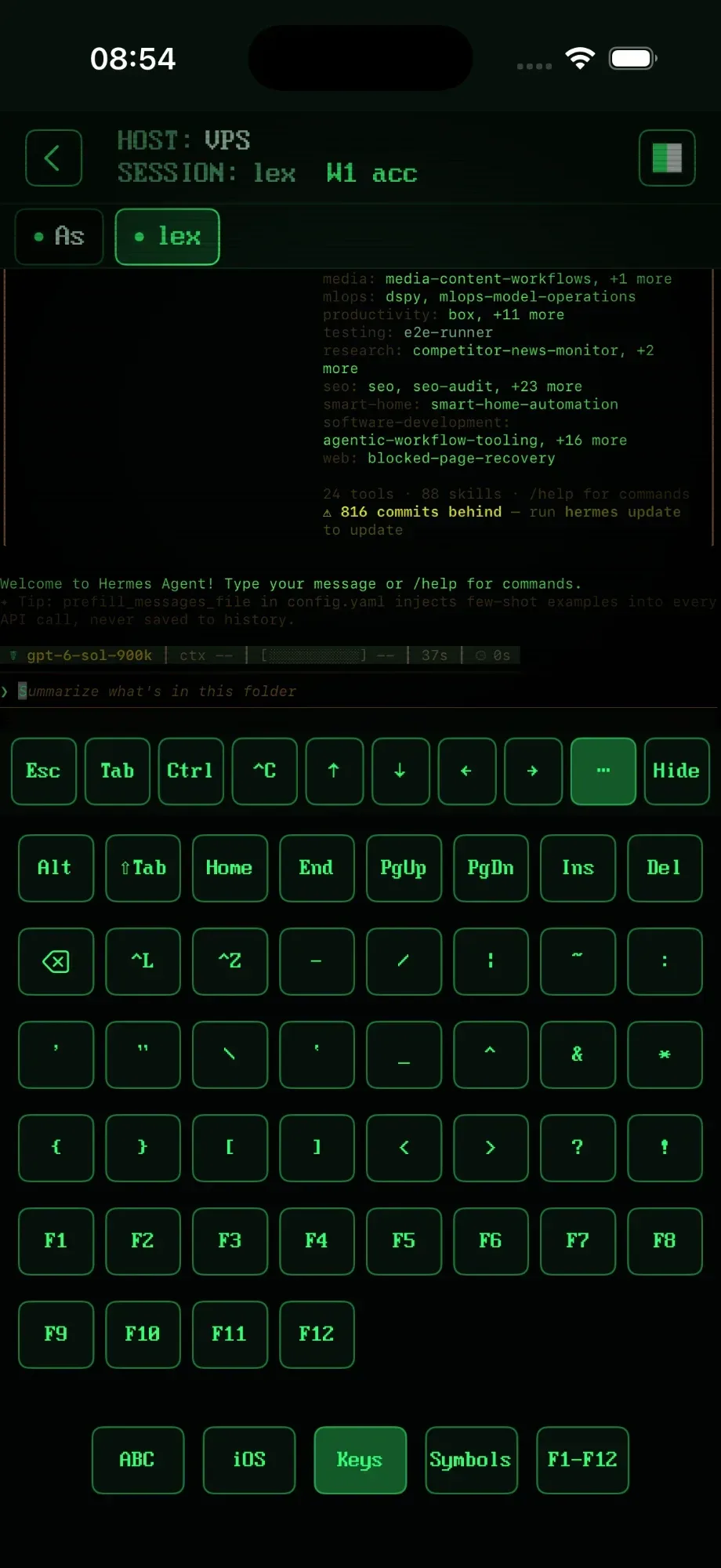
The iPhone keyboard has no Ctrl, no Esc and no Tab, which is roughly all a terminal needs. RETRO TMUX brings its own.
^C, arrows.^L, ^Z, Shift-Tab.// Built for a phone //
A terminal on a 6-inch screen only works if the app is stubborn about the details.
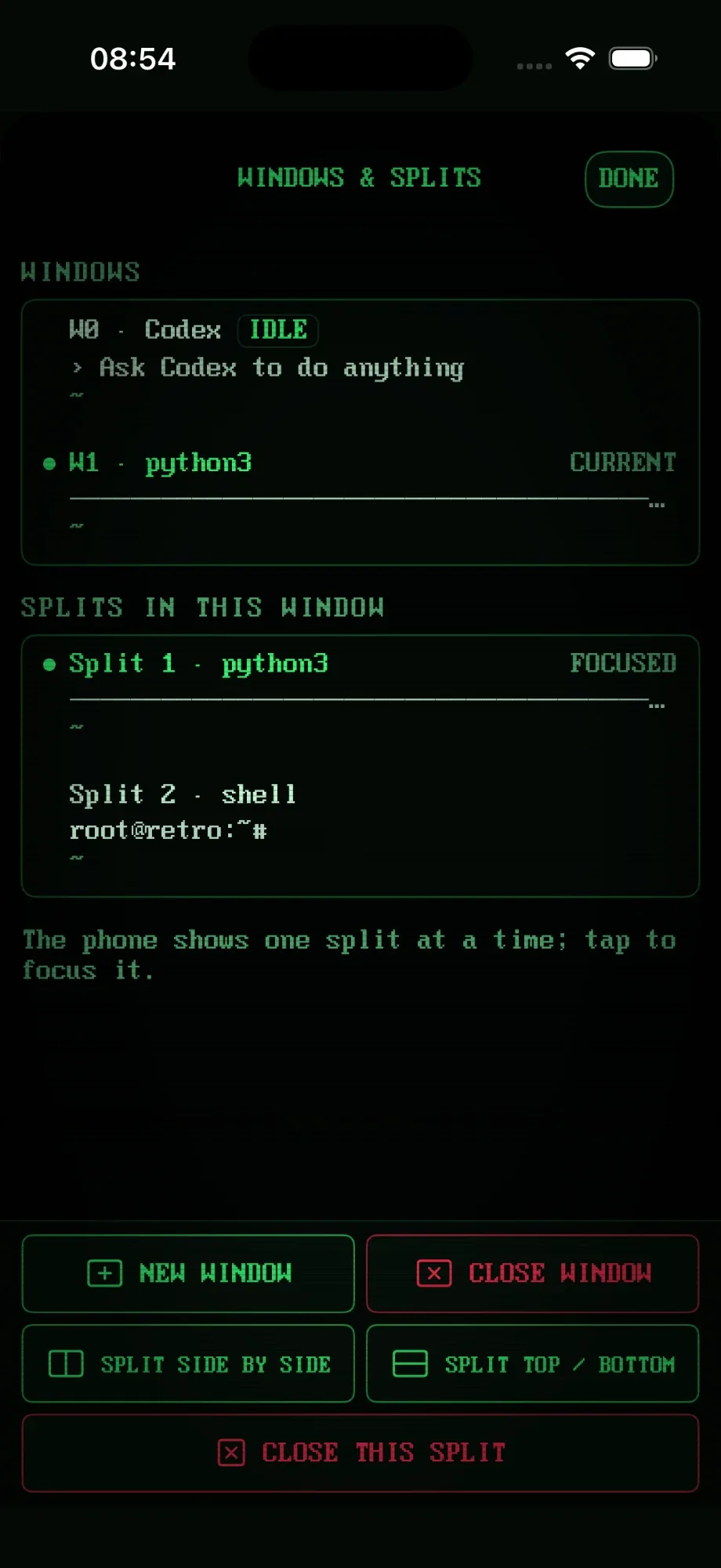
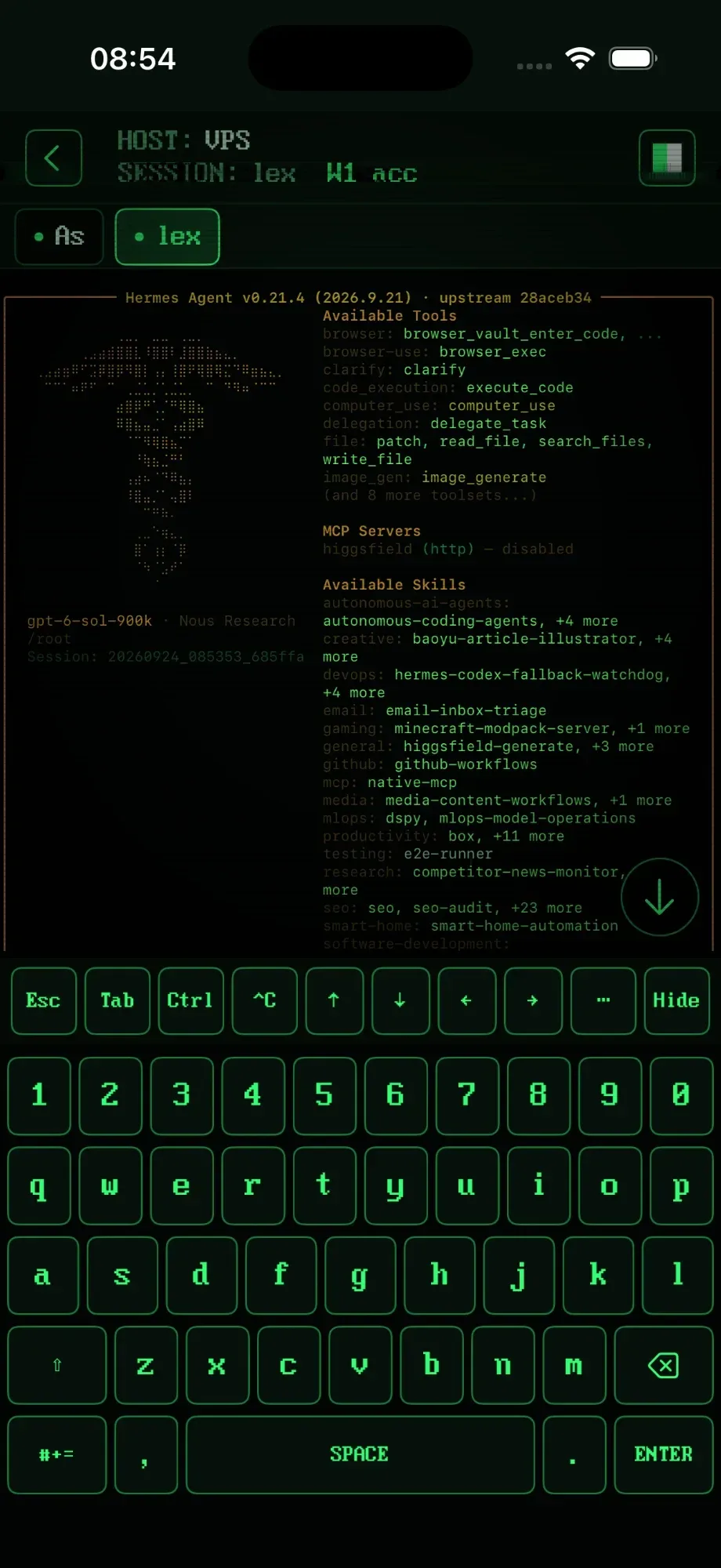
At least 80 columns, and 24 rows in portrait, so htop, vim and AI agents always get room to draw. Fit-width by default, pinch to zoom.
Everywhere, including inside mouse-mode programs like htop, vim and Claude Code. Full-screen apps render properly and keep their history.
Drag handles with edge auto-scroll, copy to the clipboard. Links are underlined: tap to open or copy, like a CLI's sign-in link on a server with no browser.
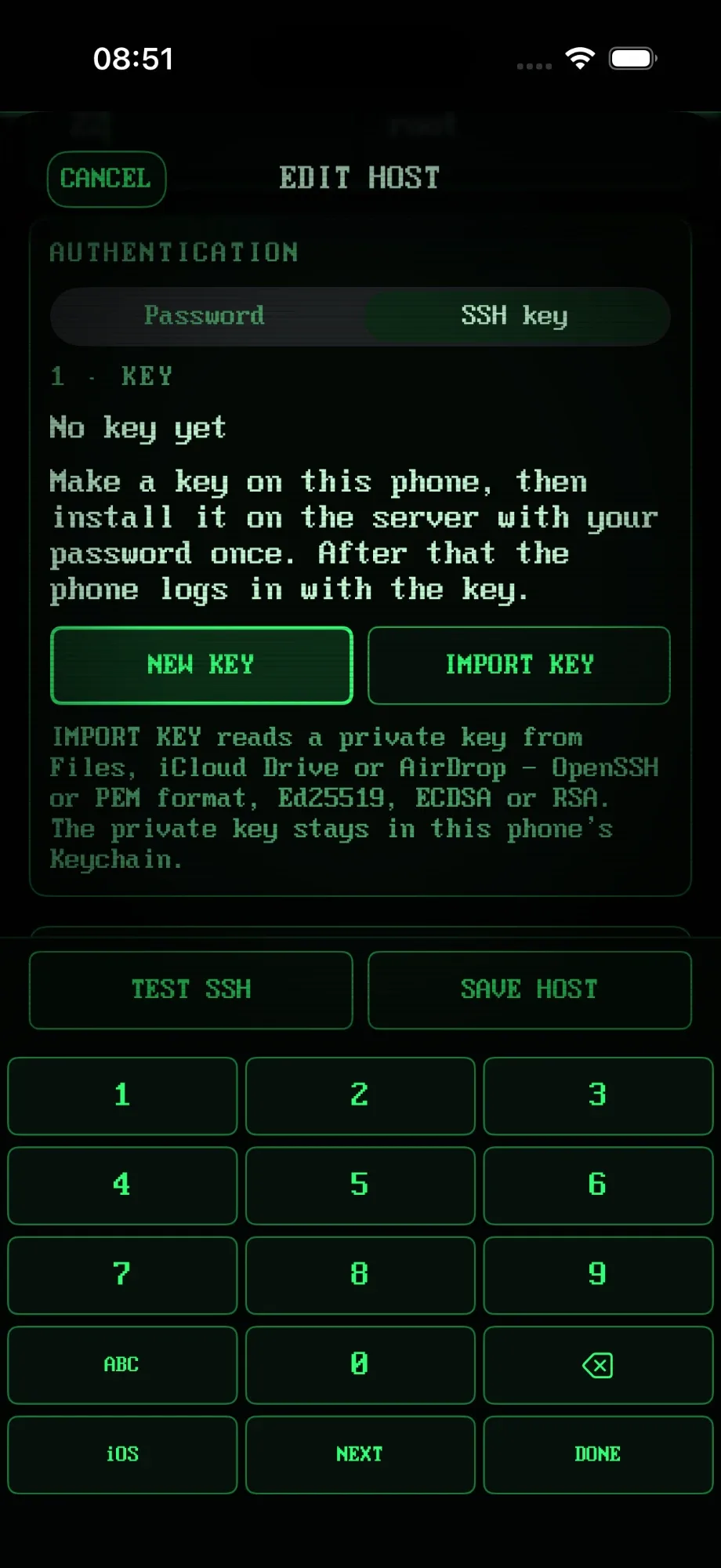
Generate an Ed25519 key on the iPhone or import yours from Files, iCloud Drive or AirDrop. Keys stay on the device unless you choose iCloud Keychain, and Face ID locks the whole app.
Unknown or changed host keys are shown for you to check before anything is sent. No account, nothing of ours in between.
The keyboard only borrows rows, and gives them back when it closes. The width never changes, so full-screen programs and agents don't reflow.
// Setup · about 5 minutes //
You need a server or computer you can SSH into (a cloud VPS, a Raspberry Pi, a Mac with Remote Login on) with tmux 3.0 or newer.
Most Linux servers install it in one command. Then start a named session for your work.
$ sudo apt install tmux   # or: brew install tmux
$ tmux new -s work
Tap + ADD HOST and enter the address. Generate an Ed25519 key on the iPhone, install it with your password once (the app gives you the command to paste), then log in with the key from then on. TEST SSH checks the key and the server before you save.
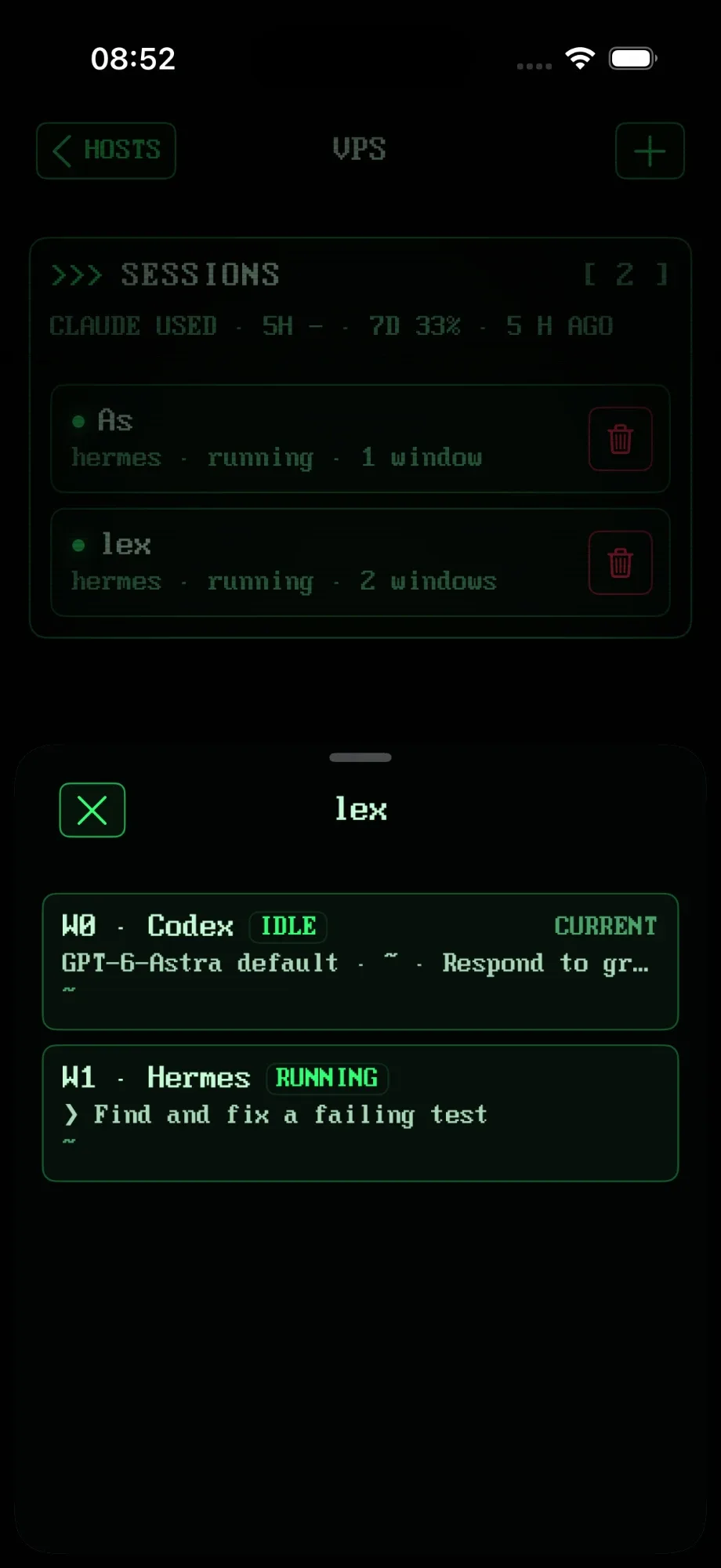
You see the server's live tmux sessions. Tap work to attach. If it has several windows, pick one from the list.
Use the key row for Ctrl, Esc and arrows. When you're done, lock the phone. Detaching never kills the session: pick it up later from the iPhone, an iPad or your laptop.
# later, from any computer:
$ tmux attach -t work
// Choosing an iPhone SSH app //
There are several good SSH clients for iPhone. If you work in tmux, these are the things that matter, and how RETRO TMUX handles each.
| What to check | Why it matters | RETRO TMUX |
|---|---|---|
| Survives the phone locking | iOS suspends apps in seconds; a plain SSH shell dies with them | Your work lives in tmux on the server |
| Ctrl, Esc, Tab, arrows | Terminal programs are unusable without them | Always-visible key row, sticky Ctrl, F1–F12 |
| Room to draw | A 40-column terminal breaks vim, htop and agents | Never fewer than 80 columns, pinch to zoom |
| Where your keys live | An SSH key is a key to your server | iPhone Keychain. No account, no cloud of ours |
| Real tmux integration | Sessions and windows as tmux sees them, not just a shell that happens to run tmux | Yes, through tmux control mode, with an ordinary attach as fallback |
| Servers without tmux | Not every box you SSH into has tmux | Plain shell mode: an ordinary SSH login |
| AI agent awareness | Know if Claude Code or Codex is working or waiting, without attaching | Working / needs you / done / idle |
No tmux on that server? RETRO TMUX opens a plain SSH shell too. On a bigger screen? Here's SSH on iPad, with split panes. Running AI agents? Here's how to use Claude Code or Codex on your iPhone. Comparing apps? Termius vs Blink vs Prompt.
// No tmux? //
Not every server has tmux, and sometimes you only want to restart a service from the sofa. Add the host as Plain shell and RETRO TMUX opens an ordinary SSH login, with the same keyboard, the same keys in the Keychain and the same 80 columns.
^C, arrows, F1–F12.sudo apt install tmux and switch the host to tmux sessions.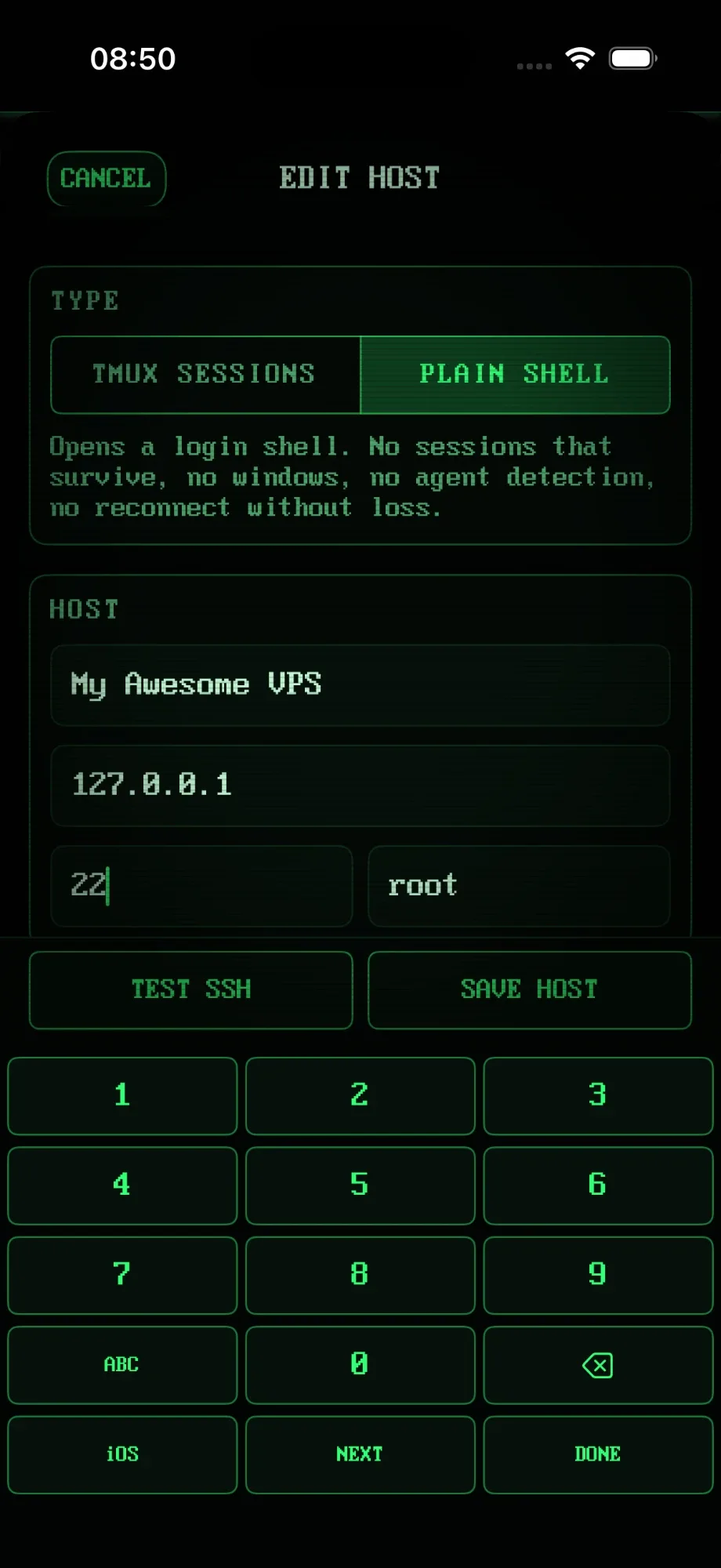
// FAQ //
Yes, with an app: iOS has no built-in terminal. An SSH client for iPhone such as RETRO TMUX connects to your server with a password or an SSH key kept in the iPhone Keychain. RETRO TMUX then attaches to tmux on the server, so your work keeps running when the phone locks.
Not a real one. The closest built-in thing is the Shortcuts action “Run Script Over SSH”, which runs one command and shows you the output. For an interactive terminal with a keyboard, scrollback and full-screen programs like vim or htop, you need a terminal app from the App Store.
iOS suspends apps shortly after they leave the screen, and their network connections go with them. With plain SSH, the server then hangs up on your shell and whatever was running in it dies. Run your work inside tmux and it keeps going on the server; you just reattach.
In RETRO TMUX, private keys and passwords live in the iPhone Keychain and stay on the device, unless you choose to sync keys with iCloud Keychain. There is no account, and your SSH session goes straight to your server. Generate a fresh Ed25519 key on the phone rather than copying your laptop's key around, and it can be revoked on its own if the phone is lost.
It depends on what you do once you're in. If you work in tmux or run AI coding agents like Claude Code on a server, pick an app built for tmux: a key row with a real Ctrl and Esc, at least 80 columns, and sessions that survive the phone locking. That's what RETRO TMUX is built for, and it also opens a plain SSH shell on servers without tmux.
Yes. When you add a host, set Type to Plain shell and RETRO TMUX opens an ordinary SSH login shell, with the same keyboard and the same Keychain keys. You lose what tmux adds: sessions that survive the phone locking, windows, split panes and agent status.
No, but you want it. Without tmux, RETRO TMUX opens a plain SSH shell (pick Plain shell when you add the host). It works, but the shell dies with the connection and there are no windows, panes or agent status. With tmux 3.0 or newer you get all of that, and installing it is one command on most servers, for example sudo apt install tmux.
>>> READY WHEN YOU ARE
RETRO TMUX is in beta. Join, and we'll tell you when there's a build to break.
+ JOIN THE BETAMore: what RETRO TMUX does · SSH on iPad · Claude Code on iPhone